
Google Ads for education providers.
Reach students and parents when they are actively comparing programmes, locations and admissions options.
Education providers supported across Europe



Campaigns for different types of education provider.
Language schools
Courses, examination preparation, locations and international study demand.
Course and city searchesUniversities
Programmes promoted by subject, level, market and application stage.
Degree and application searchesPrivate schools
Admissions, open days, local families and international applications.
Admissions and location searchesNurseries
Local campaigns for families comparing childcare and early years options.
Local and availability searchesTraining providers
Career focused courses, qualifications, format and professional outcomes.
Skills and course searchesInternational recruitment
Country and language specific campaigns for students searching from abroad.
Market specific searchesWhy education campaigns waste budget.
The platform is rarely the only problem. Weak structure, broad targeting and unclear pages reduce the value of every click.
Keywords are too broad
Generic searches attract people with no clear programme or application intent.
Markets are grouped together
Different countries, languages and programme demand need distinct targeting and messages.
Warm visitors are forgotten
Students often compare over time, so thoughtful audience follow up can recover interest.
Traffic reaches generic pages
Sending a specific programme search to a homepage or course list creates friction.
Tracking stops at the click
Forms, calls and lead quality must be measured to understand which campaigns support admissions.
The admissions response is disconnected
Slow follow up can waste a qualified enquiry after the advertising has done its job.
Student recruitment is not generic lead generation.
Students search by programme, level, location, price, language and examination. Campaigns should reflect those decisions.
Weak campaign structure
Generic traffic with no programme intent
One campaign stretched across every market
Homepage used for all paid traffic
Clicks reported without lead quality
No follow up for interested visitors
Stronger campaign structure
Programme and location intent captured
Markets separated by language and demand
Ads matched to focused pages
Enquiry quality measured
Thoughtful follow up for warm audiences
Four parts of effective education advertising.
The programme, audience, market and journey after the click all shape campaign performance.
Student search campaigns
Capture people already looking for courses, schools, programmes or admissions with focused structure and relevant ad copy.
Warm audience follow up
Reconnect with visitors who explored important pages but needed more time before enquiring.
International and multilingual targeting
Separate countries, languages and programme demand so each market receives suitable targeting and messaging.
Landing page and enquiry alignment
Connect ads with focused programme pages and clear actions, then measure what happens after the click.
From research to scaling the campaigns that work.
Market research
Map programmes, target countries, competitors and demand before spending budget.
Search research
Separate programme and enrolment intent from broad research traffic.
Campaign build
Create focused campaign groups, relevant messages and suitable market targeting.
Landing page work
Connect each campaign with a useful, relevant page and a clear enquiry path.
Tracking and reporting
Measure forms, calls, WhatsApp conversations and useful admissions leads.
Improve and expand
Focus budget on stronger results and test new programmes or markets carefully.
Campaigns that have actually run.
Examples of Google Ads work for education brands, supported by real dashboard screenshots.
Student recruitment search campaign
Challenge
Broad campaigns lacked programme intent and warm visitors were not brought back to relevant pages.
Work completed
Search restructuring, programme targeting, audience work and landing page alignment.
International student recruitment
Challenge
Several markets and languages were grouped together, making budget allocation and demand difficult to understand.
Work completed
Country targeting, language specific campaigns, programme searches and market focused pages.
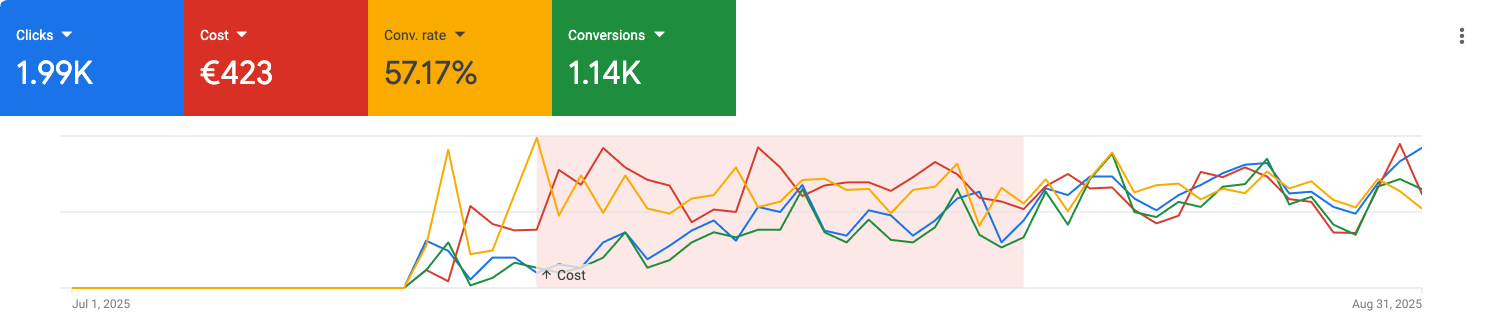
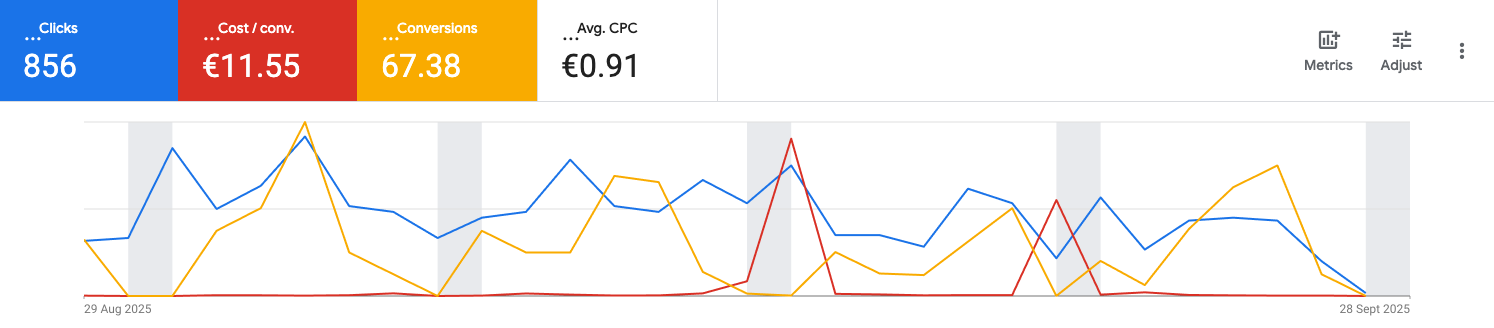
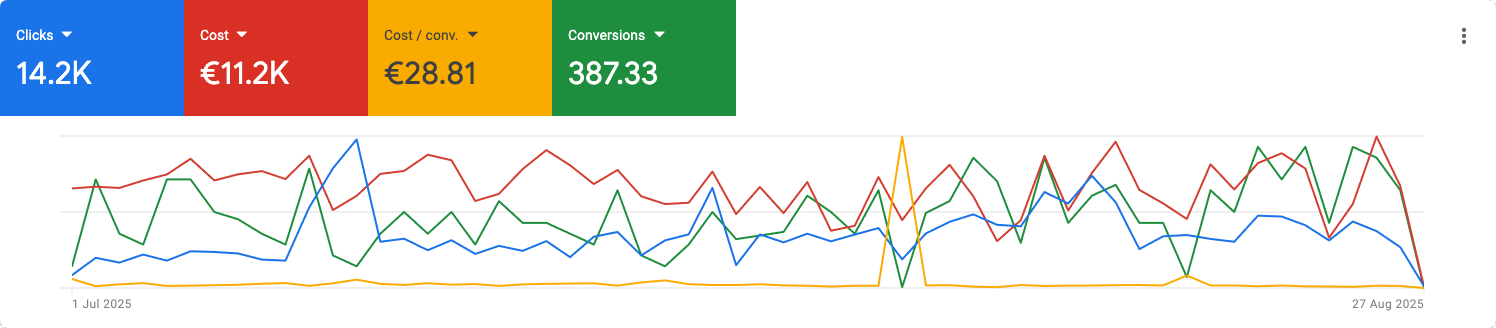
Google Ads dashboard screenshots. Results vary by programme, budget, market and admissions process.
The advertisement is only one part of the journey.
Performance depends on what happens from the initial search through to the admissions response.
Request a campaign review →Search
The student looks for a programme, school, course or admissions option.
Advertisement
The message must match the search and set an accurate expectation.
Programme page
The page explains the programme clearly and supports comparison.
Enquiry
The form or call path makes the next step simple.
Follow up
Interested visitors receive timely information when they are not ready immediately.
Admissions
The response from the team turns a qualified enquiry into a real application.
Education experience with direct specialist access.
Education focused strategy
Campaigns reflect student behaviour and admissions goals.
International experience
Language, location and demand are considered separately by market.
Landing page support
The work considers the page and enquiry flow, not only the account.
Direct access
You speak with the specialist planning and running the campaigns.
What is included with Marketyro.
Questions about Google Ads for education.
Straight answers for schools, universities and training providers.
Ask a questionHow much should an education provider spend?+
The right starting point depends on programme value, search demand, countries and competition. A review of the market is more useful than applying one fixed minimum to every provider.
Are Google Ads effective for student recruitment?+
They can be effective when campaigns focus on genuine programme and admission intent, use relevant pages and measure actual enquiries.
Can Google Ads generate international students?+
Yes. Countries, languages and programme demand should be structured separately so budget follows the markets with realistic opportunity.
Is SEO or Google Ads better for schools?+
They serve different timelines. Advertising can create demand quickly, while SEO develops longer term visibility. See SEO for Education Providers.
How soon can campaigns generate enquiries?+
Relevant searches can produce enquiries soon after launch, but the first weeks are also used to improve targeting and understand lead quality.
Can you improve campaigns that are already running?+
Yes. Existing data can help identify wasted spend, useful searches and structural opportunities before campaigns are rebuilt.
Do you manage campaigns in different languages?+
Yes, depending on the target markets and language requirements. Messages and pages should be appropriate for each audience.
How is enquiry quality measured?+
Forms, calls and WhatsApp conversations are tracked, and can be connected with admissions or customer systems where practical.
Put your programmes in front of more relevant students.
Send your organisation, main programmes and target markets. You will get direct feedback on where budget may be wasted and what should be prioritised.
Request your Google Ads review →Direct conversation with the specialist doing the work.